
AI isn't taking your job. It's taking the boring parts.
AI isn’t taking your job. It’s taking the boring parts.
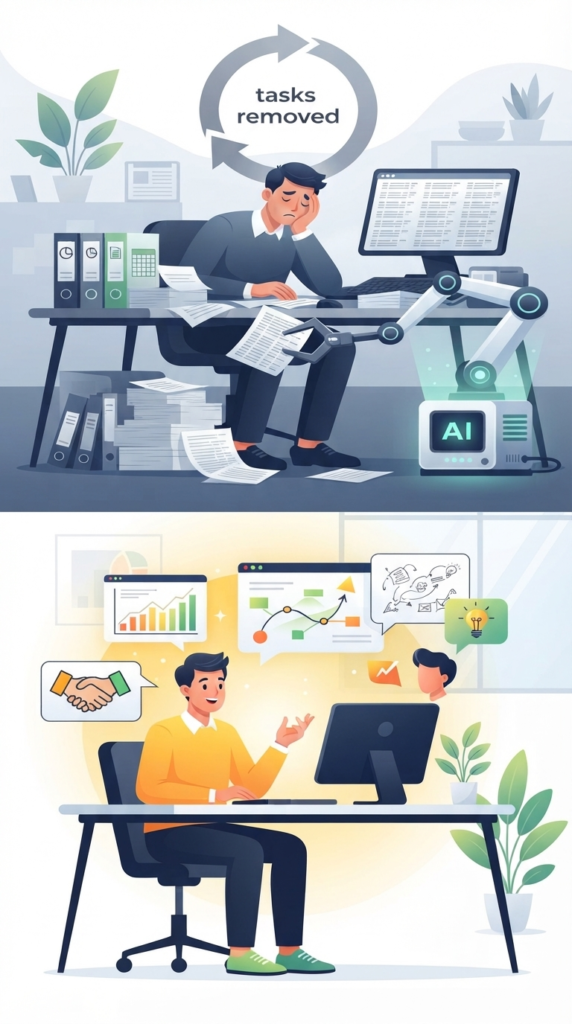
The data entry. The fifteenth follow-up email. Reformatting the same report for the third time this month. That’s what AI’s actually good at — repetitive, no real judgment required. Good riddance, honestly.
What it can’t take is the part where you decide what matters. Reading a client who’s about to walk. Deciding which project deserves your attention this week. That messy, human judgment call — no prompt replaces that.
So AI isn’t coming for your job. It’s coming for the parts you never liked doing anyway. What you do with the extra time is on you.
What is AI in digital marketing, really?
Strip away the buzzword and it’s just software that spots patterns in data faster than a person staring at a spreadsheet. Which subject line gets opened more. Which ad deserves more budget. That’s the whole trick — no magic, just math wearing a nicer outfit.
By 2026 it’s everywhere, and most people don’t notice it anymore. A product suggestion that actually fits, an email that lands right as you check your phone — that’s AI quietly doing its job in the background. It’s already built into the tools marketers use every day, so nobody bothers pointing it out.
AI in content creation
Text, video, and audio have all changed shape — none of it replaces real creative judgment, just the grunt work around it.
Text
A rough draft or ad line in seconds — handy for beating the blank page, but it still needs a real edit or it reads flat.
Video
A script turns into a talking-head clip or social edit without a production crew, plus auto captions and resizing for each platform.
Audio
Voiceovers, intros and background music generated in minutes. Voice cloning keeps one narrator consistent across dozens of videos.
How AI improves SEO
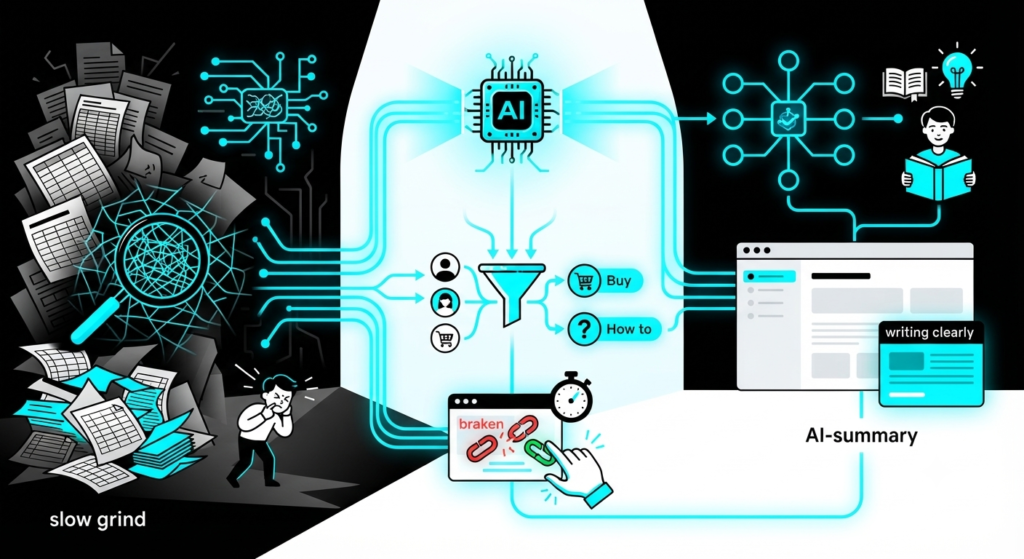
SEO used to mean a slow grind through spreadsheets and guesswork. AI hasn’t killed that grind, but it’s made it a lot less painful.
Keyword tools now sort hundreds of search terms by real intent in seconds — telling “buy running shoes” apart from “how to choose running shoes” without you squinting at every query. Content-gap tools scan competitor pages and point out what you’re missing. And with search engines leaning harder into AI-generated summaries this year, doing SEO well in 2026 mostly comes down to writing clearly enough that people and machines can both follow along.
Technical SEO got easier too — crawlers catch a broken link or a slow page almost the second it happens.
The catch
AI can tell you what to write about. It still can’t tell you why your audience actually cares. That part stays on you.
Smarter social media marketing
Social platforms have quietly gone AI-first on the backend. Marketers who ignore that are working against the algorithm instead of with it.
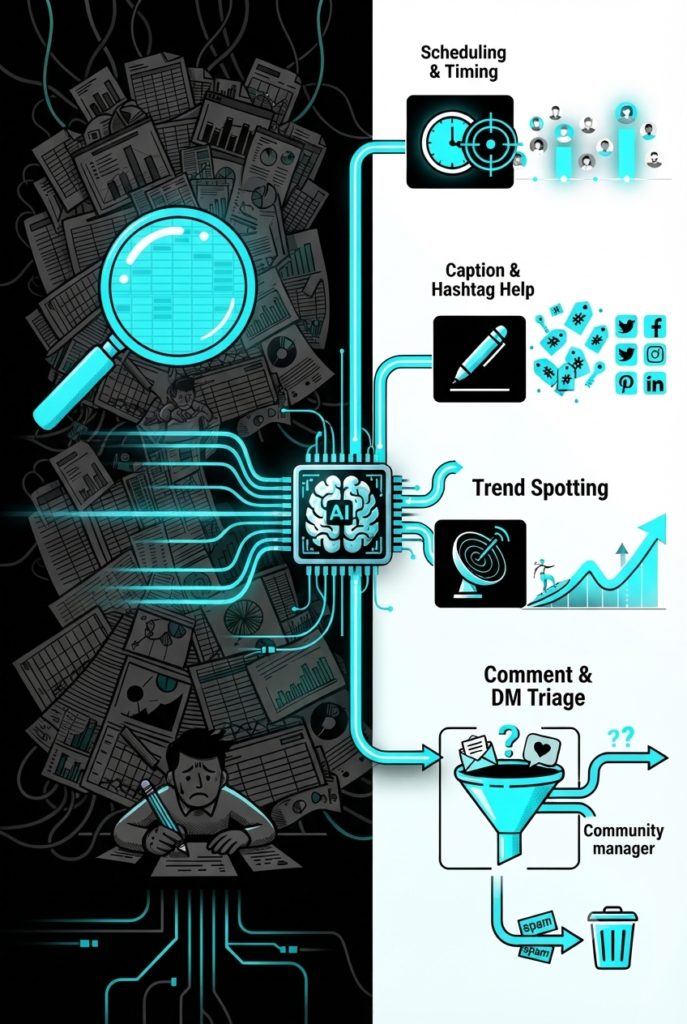
- Scheduling & timing. Tools predict when your specific audience is actually online, not some generic “best time to post” chart everyone copies.
- Caption & hashtag help. Quick drafts and relevant tags — handy when you’re posting across five platforms and out of ideas by the third one.
- Trend spotting. Listening tools catch a trending sound or format in your niche before it peaks, so you’ve actually got a window to jump in.
- Comment & DM triage. Sorting real customer questions from spam so your community manager isn’t scrolling through junk all day.
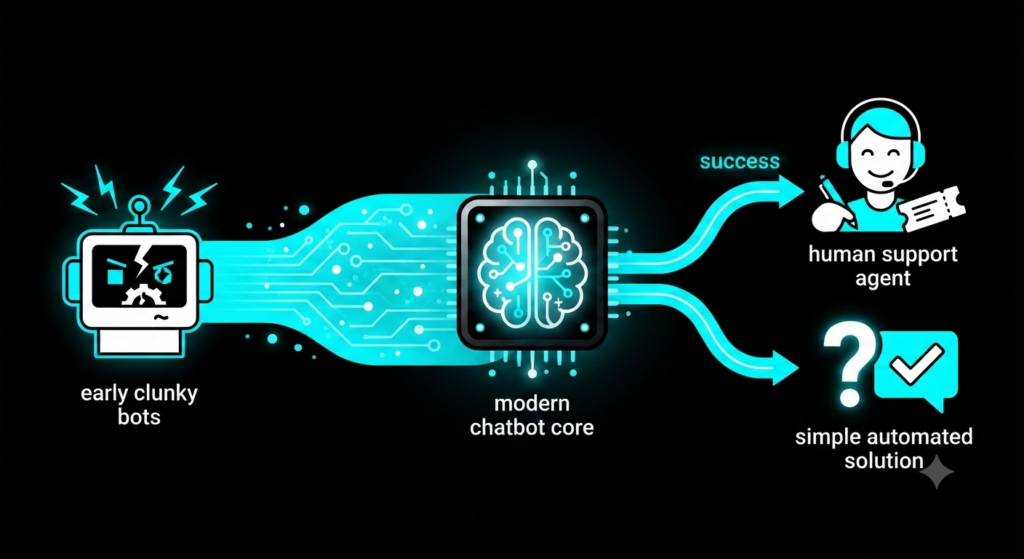
Better customer support with chatbots
Early chatbots were clunky and easily confused — anyone who’s used one from five years ago remembers the frustration. Today’s bots understand context, handle messy phrasing, and know when to hand off to a human instead of looping forever.
The payoff: faster responses, support that never sleeps, and customers who aren’t stuck waiting on a simple answer. Support teams win too, since they’re only pulled in for questions that genuinely need a person.