
Google Ads vs. Meta Ads which one is right for your business?
Both platforms can grow a business. Neither works the same way. Here’s the honest breakdown from My Digital Savvy — Indore’s straight-talking digital marketing team — of what actually separates Google Ads and Meta Ads, before you spend a single rupee on either.
What each one actually costs
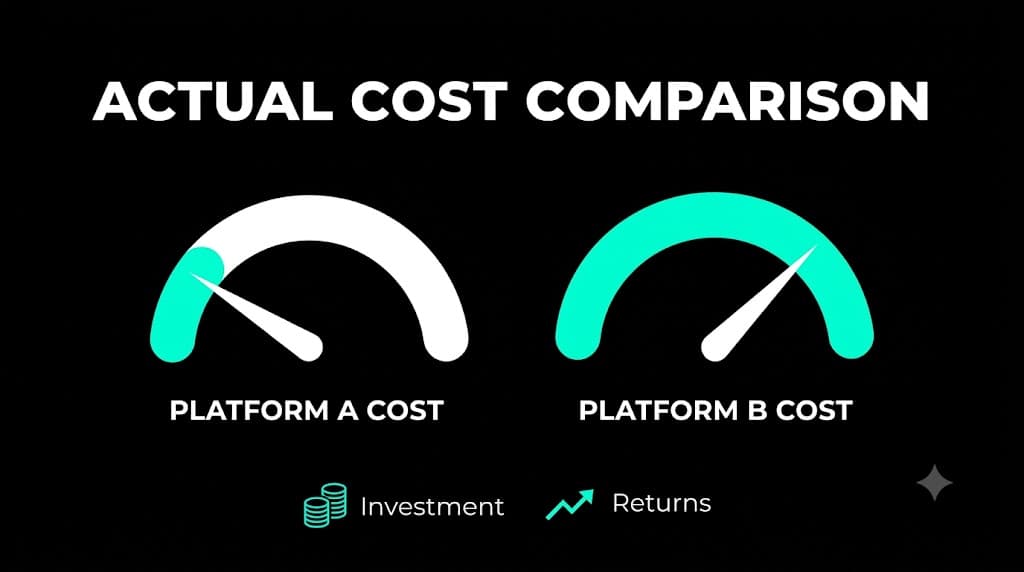
Google runs on an auction system, and the price changes depending on how competitive your industry is. Something like “root canal near me” can run you eight to fifteen dollars a click in a big city, sometimes more if every dentist in town is bidding on the same keyword. Meta usually costs less per click, sometimes under a dollar, but that number can be misleading on its own. You’re not paying for someone who wants to buy right now, you’re paying for someone’s attention while they scroll. A cheap click that never turns into a customer ends up costing more than an expensive one that does convert.
Which one fits your business
If people search for what you sell the moment they need it, Google goes first. If your product is visual enough to make someone stop scrolling, Meta has the advantage.
Anyone someone calls when something’s already gone wrong.
- Emergency plumbers & electricians
- Lawyers & consultants
- Movers, locksmiths, repair services
- Clinics & urgent care
Meta
Anything visual enough to earn a second look.
- Fashion & accessories
- Skincare & beauty
- Home decor & furniture
- D2C e-commerce brands
Running both together
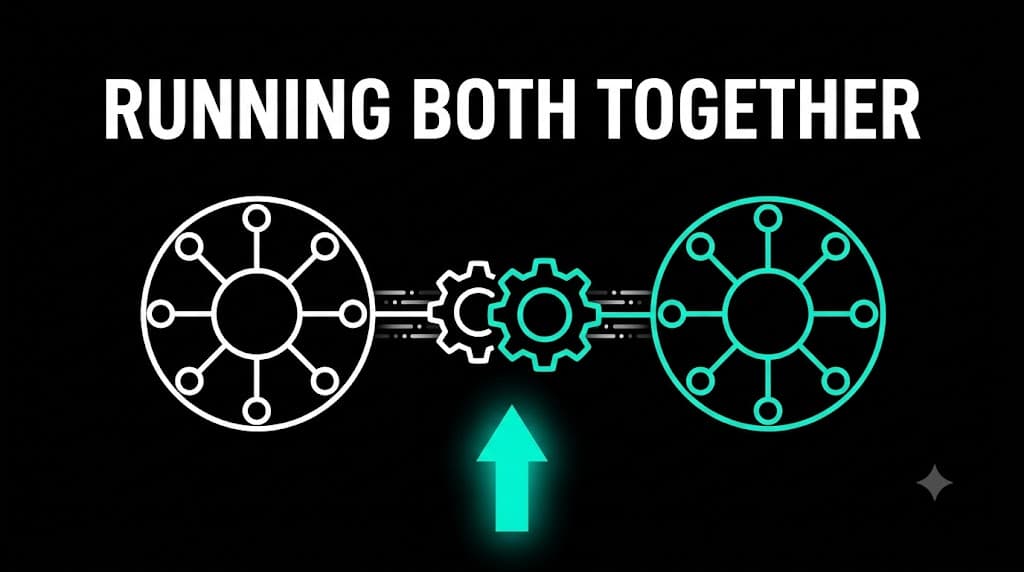
Once your budget allows for it, running both platforms together usually outperforms picking just one.
A setup that works well for a lot of businesses: Meta introduces your brand and builds familiarity first, then Google catches that same person later on, once they’re actually ready to search and buy. We’ve watched this play out with clients here in Indore too — branded search volume climbs noticeably within a few weeks of launching Meta campaigns, as people see the ad, get curious, then go Google the business before purchasing.
Intent vs. interest
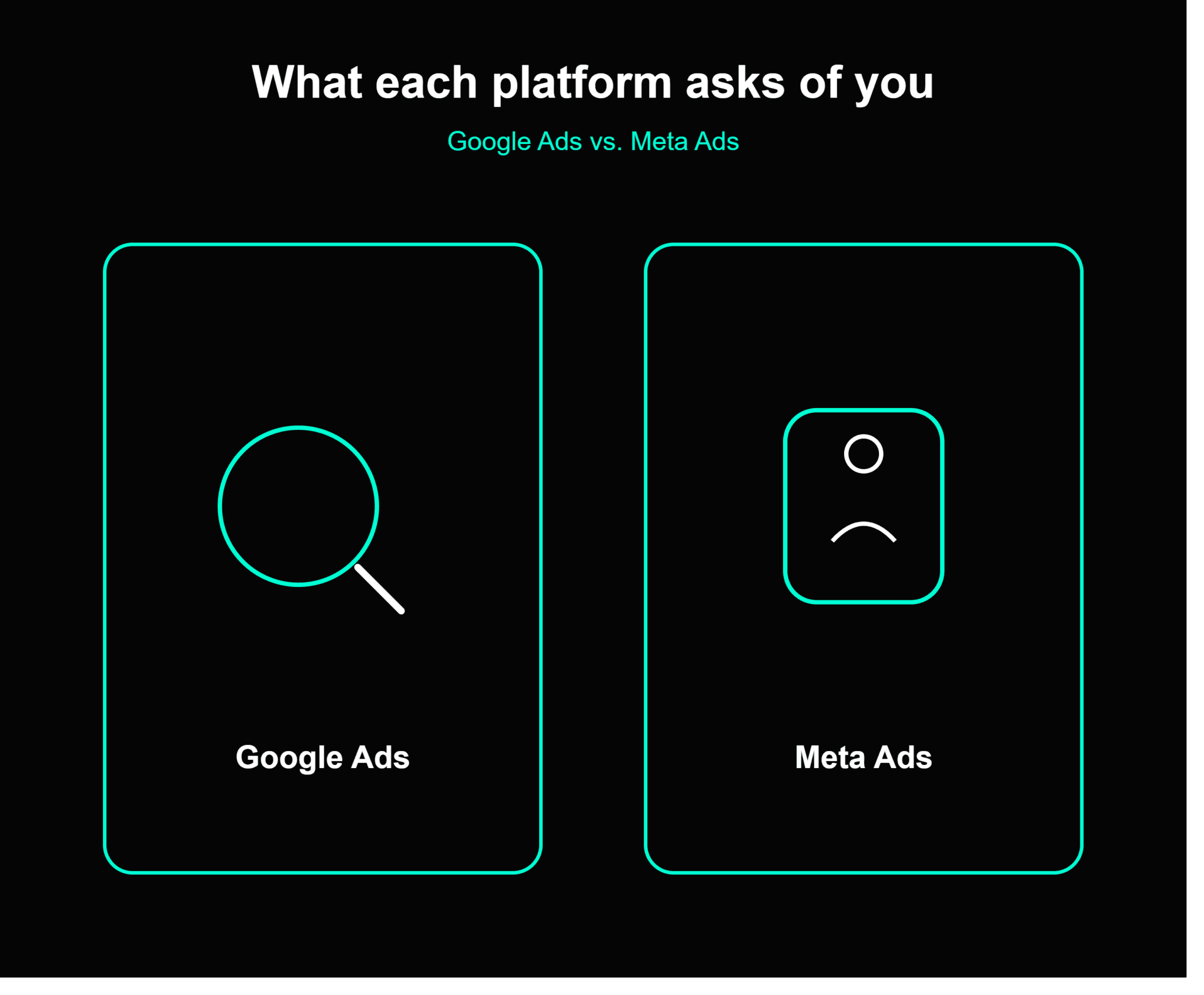
Google shows your ad to someone actively typing what they want. Meta shows your ad to someone who wasn’t looking for you at all.
That’s intent versus interest. Intent tends to convert faster, because the person is already halfway to a decision. Interest usually needs more convincing before it turns into a click — and even more before it turns into a sale.
- Headlines that match real search terms
- Descriptions that set the right expectation
- A landing page that delivers what the ad promised
Meta
- An image or video that stops a thumb in 1–2 seconds
- Visuals that work with sound off
- A steady supply of fresh creative, not just one ad
How to actually track results
Google Ads tends to show cleaner conversion tracking because someone clicked with clear purchase intent already in mind. Meta gives you more nuanced metrics like engagement, video views, and attribution windows — meaning a sale might get credited to an ad someone saw a week before they actually bought. Set up proper conversion tracking on both platforms before you spend a single dollar.
Mistakes to avoid
- Ignoring the landing page — a great ad sending traffic to a slow or unclear page burns budget for nothing. <br
- Launching Meta ads with zero brand recognition and expecting immediate sales — awareness genuinely takes time to build.
- Judging results after three days instead of three weeks — the data simply isn't there yet to make a real call.
- Skipping keyword research on Google before setting up a campaign — ads barely show up because nobody bid on the right terms.
- Turning a campaign off the moment it slows down — probably the costliest one, it stops the algorithm before it finishes learning.
Not sure which platform fits your budget?
Get a free audit — no pressure, just a straight answer.